โ† Read the full guide
All infographics

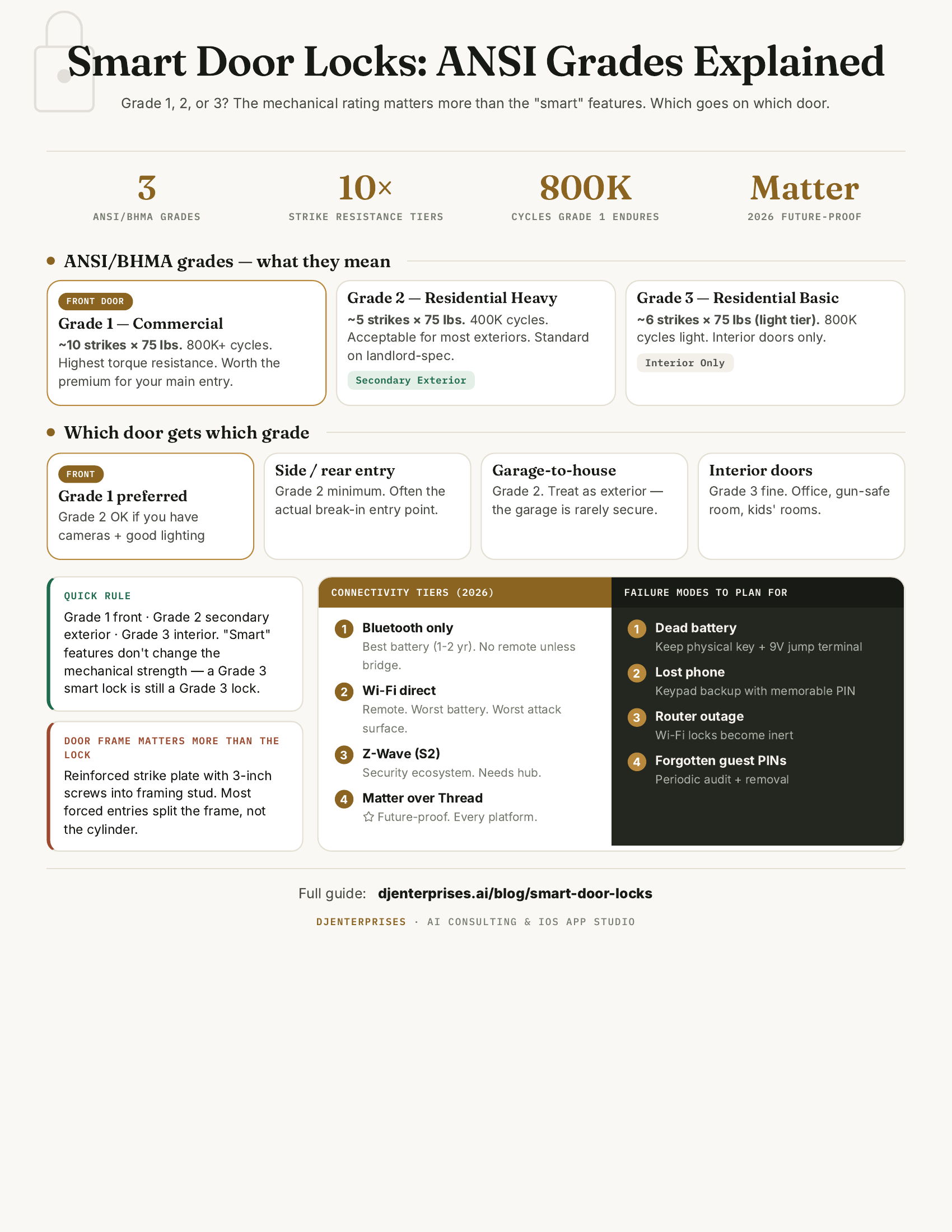
Smart Door Locks: ANSI Grades Explained

Grade 1, 2, or 3? The mechanical rating matters more than the "smart" features. Which goes on which door.


3
ANSI/BHMA Grades
10ร—
Strike Resistance Tiers
800K
Cycles Grade 1 Endures
Matter
2026 Future-proof
ANSI/BHMA grades โ€” what they mean
FRONT DOOR
Grade 1 โ€” Commercial
~10 strikes ร— 75 lbs. 800K+ cycles. Highest torque resistance. Worth the premium for your main entry.
Grade 2 โ€” Residential Heavy
~5 strikes ร— 75 lbs. 400K cycles. Acceptable for most exteriors. Standard on landlord-spec.
Secondary Exterior
Grade 3 โ€” Residential Basic
~6 strikes ร— 75 lbs (light tier). 800K cycles light. Interior doors only.
Interior Only
Which door gets which grade
FRONT
Grade 1 preferred
Grade 2 OK if you have cameras + good lighting
Side / rear entry
Grade 2 minimum. Often the actual break-in entry point.
Garage-to-house
Grade 2. Treat as exterior โ€” the garage is rarely secure.
Interior doors
Grade 3 fine. Office, gun-safe room, kids' rooms.
Quick Rule
Grade 1 front ยท Grade 2 secondary exterior ยท Grade 3 interior. "Smart" features don't change the mechanical strength โ€” a Grade 3 smart lock is still a Grade 3 lock.
Door Frame Matters More Than the Lock
Reinforced strike plate with 3-inch screws into framing stud. Most forced entries split the frame, not the cylinder.
Connectivity tiers (2026)
Failure modes to plan for
  1. Bluetooth only
    Best battery (1-2 yr). No remote unless bridge.
  2. Wi-Fi direct
    Remote. Worst battery. Worst attack surface.
  3. Z-Wave (S2)
    Security ecosystem. Needs hub.
  4. Matter over Thread
    โ˜… Future-proof. Every platform.
  1. Dead battery
    Keep physical key + 9V jump terminal
  2. Lost phone
    Keypad backup with memorable PIN
  3. Router outage
    Wi-Fi locks become inert
  4. Forgotten guest PINs
    Periodic audit + removal